



Understanding Trans Sexting: A Comprehensive Guide
Trans sexting is sexting that involves at least one transgender person—the exchange of sexually explicit texts, images, or videos through phones or apps. At its core, it works much like sexting in general, but it often carries extra layers for trans people: questions of safety, consent around disclosure, and the very real need to navigate stigma or fetishization with care.


Editor:
Olena Kosonogova
Author:
Olena Kosonogova
Olena Kosonogova (she/her) is Chief Information Officer at Fiorry. Olena brings a background in social work and psychology, which gives her a unique perspective on information strategy, systems thinking, and user-focused infrastructure. She oversees data flows, internal systems, and the alignment between technology and communication across the platform. Drawing on her experience in public relations and strategic operations, she helps ensure that Fiorry’s information architecture supports both growth and clarity. Outside of work, Olena values balance through tennis, spending time outdoors, and challenging her mind with a thoughtful game of chess.
Key Takeaways
- Definition of Trans Sexting
- Importance and Relevance of the Topic
- Evolution of Sexting
- Role of Technology and Social Media in Transgender Dating
- Impact on Transgender Identity
- Psychological Aspects
- Risks of Sexting
- Strategies for Safe Sexting in Dating Apps
- Cultural Perspectives: Views Within Transgender Communities
- Representation in Media
- Role in Building Intimacy
- Differences in Practices
- Navigating Communication Boundaries: How to Start a Conversation
- Overview of Legal Issues
- Specific Laws Affecting Trans People
- Conclusion
- FAQ
- EXPLORE OTHER TERMS
Definition of Trans Sexting
Trans sexting is a form of digital intimacy where at least one participant is a transgender person.
Understanding what is trans sexting helps explain how digital communication intersects with gender identity and sexual orientation in modern intimacy. The trans sexting meaning goes beyond flirtation—it reflects how people choose to express desire, trust, and vulnerability online, especially in spaces where respect and boundaries truly matter.
As online dating and transgender dating become part of everyday life, trans sexting means different things to different people. For many transgender people, it can be a way to feel seen, desired, and affirmed before ever meeting in person. Whether you’re a transgender person, a cis partner, or simply curious about how digital intimacy works today, learning trans sexting what is it and seeing trans sexting explained clearly can help you build safer, more respectful, and genuinely authentic connections in any relationship.

It can include private messages, images, or videos shared to express attraction, curiosity, or desire. Crucially, this kind of sexting doesn’t happen only between trans people—it can also involve cisgender people, partners of different sexual orientations, and mixed dynamics where openness, trust, and consent are especially important.
Within the sexting in the transgender community, these exchanges often feel more personal than casual flirting. For many transgender women and trans men, sexting creates space to explore gender identity and sexuality without the pressure that often comes with in-person encounters. That’s why people frequently ask if sexting is common in trans community spaces—it allows individuals to decide how and when they share parts of themselves.
Across the broader sexting in the LGBTQ+ community, digital intimacy is often shaped by experience and caution. Conversations may move slowly, with clear boundaries and attention to sexual behavior that feels affirming rather than invasive. For trans-oriented men or partners who are new to dating trans people, these interactions can become a way to learn how to engage respectfully, without assumptions or fetishization.
At its best, trans sexting helps build intimacy while maintaining a sense of safe space. It gives people room to connect emotionally, feel desired, and grow more confident—especially in situations where offline dating still feels uncertain or unsafe.
Once you understand trans sexting, you may want to explore local communities. Here’s a guide to trans dating near me for meeting like-minded people nearby.
Importance and Relevance of the Topic
For many people, digital communication is now the easiest way to connect, flirt, and test emotional chemistry. Inside the transgender community, this shift carries particular weight. Online spaces often feel safer and more predictable than offline ones, making it easier to form authentic connections through everyday online interactions, without constant fear of judgment or misunderstanding.
For the trans community, sexting can become a quiet but meaningful step toward connection. It creates a safe environment where people can express interest, talk about boundaries, and engage with like-minded people at their own pace. For those who’ve faced rejection or awkward explanations in the past, these exchanges can noticeably strengthen self-esteem—sometimes more than a first in-person meeting ever could.
As online dating continues to shape how relationships begin, trans sexting has settled into a practical role rather than a dramatic one. It helps conversations flow before anyone decides to meet, easing uncertainty on both sides. In a world where digital closeness often comes before physical proximity, these moments of trust and openness quietly matter—not because they’re new, but because they help people feel seen.
Evolution of Sexting
Sexting didn’t appear suddenly. It developed over time, alongside the growth of the internet and mobile communication. As tools changed, so did the way most people learned to connect and express intimacy online. What started as cautious experimentation slowly became a familiar part of digital relationships.

1990s: early text messaging
When SMS became common, private and suggestive messages were suddenly possible. These early exchanges relied on tone and imagination rather than visuals. For many young adults, this felt like a low-pressure way to explore attraction without putting themselves fully on display.
Early 2000s: multimedia messaging
The introduction of MMS changed the dynamic. Sharing photos made sexting more personal and, at times, more vulnerable. Research later discussed in an international journal linked this shift to evolving sexual behavior, especially around trust and expectations inside relationships.
Late 2000s: smartphones and constant access
Smartphones made sexting easier and more immediate. Cameras and messaging apps were always within reach, and people began to engage in intimate exchanges more spontaneously. A present study cited in public health research suggests this constant access helped move sexting from something occasional to something routine.
2010s: social platforms and private messaging
As social networking platforms expanded, sexting adapted again. Private chats, disappearing messages, and better privacy controls gave users more say over what they shared and with whom. Digital intimacy started to mirror offline patterns such as trust, timing, and emotional readiness.
Today: sexting as a normalized practice
Today, sexting is widely understood as a relevant part of modern intimacy. It is one of several ways people explore attraction, communicate boundaries, and build closeness in an online world where connection often begins digitally rather than face-to-face.
After learning about trans sexting, it’s worth considering the deeper advantages of dating a trans woman — both emotionally and socially.
Role of Technology and Social Media in Transgender Dating
Technology didn’t just change how people date. It changed how conversations even start. In transgender dating, this shift matters a lot, because first impressions are often about safety, not romance. Digital spaces give people a chance to explain who they are before emotions or expectations get tangled.
Dating apps help slow things down in a good way. A thoughtful trans dating app lets users choose what they want to share and when. That alone can remove a lot of tension. Even using one familiar app can make early conversations feel more manageable, especially when no one wants to turn a first message into a personal explanation.
Social media and private chat features also shape how attraction develops. Messaging gives people room to warm up to each other, ask questions, and see whether communication feels easy. In transgender dating, these early online interactions often act as a filter. They help people decide whether it feels right to keep talking or whether it’s better to step away before getting invested.
Of course, not every platform feels safe. Open dating sites can invite attention that’s awkward at best and uncomfortable at worst. That’s why many users look for trans-friendly spaces with clear rules, reporting tools, and real moderation. Those details matter. They help create a safe environment where conversations feel intentional instead of risky.
When technology works the way it should, it does more than help people flirt. It helps them find potential partners, set boundaries early, and move toward connection at their pace. That’s why, for many people, digital tools have become a quiet but necessary part of how transgender dating actually works in real life.
Impact on Transgender Identity
For many transgender individuals, digital communication isn’t just a convenience. It can directly shape how they experience and understand their own identity. Sexting and private messaging offer a rare level of control. People decide what to show, what to say, and when to say it. That control matters, especially when everyday life doesn’t always feel accommodating.
For a transgender person, sharing intimate thoughts or images online can be a way to explore gender expression without pressure. Some trans men and transgender women describe these moments as quieter and more honest than offline dating. There’s time to think, to choose words carefully, and to present oneself in a way that feels true. This kind of space can reduce anxiety and soften the impact of stigma that often follows trans people into public interactions.
In transgender dating, sexting sometimes becomes a testing ground. It helps people see how a potential partner reacts to boundaries, pronouns, or vulnerability. Interactions like these can reveal whether someone feels safe or dismissive. Compared to cisgender people, many trans users feel they have more at stake early on, which makes these small signals especially important.
When communication goes well, the effect can be grounding. Feeling desired without being reduced to stereotypes supports confidence and emotional balance. When it goes poorly, it can reinforce old doubts. That’s why trans-friendly environments matter so much. They shape whether transgender digital intimacy becomes affirming or exhausting and whether people feel encouraged to keep exploring connection or to pull back for self-protection.
In the end, sexting doesn’t define anyone’s relationship to their body or gender. But for many trans people, it can influence how comfortable they feel expressing themselves, trusting others, and imagining future connections. In that sense, digital intimacy becomes part of the ongoing process of understanding who you are and how you want to be seen.
Psychological Aspects

Questions about intimacy online often come with emotions, and that’s especially true here. People regularly ask if sexting is common in the trans community, and the short answer is yes, but not always for the reasons outsiders assume. For many, trans sexting is less about explicit content and more about reassurance, validation, and feeling wanted without immediate pressure.
For some transgender women and trans men, sexting helps bridge emotional distance. Positive responses from partners can strengthen self-esteem, especially after experiences of rejection or silence in offline dating. These moments of affirmation can feel grounding. At the same time, not every interaction is positive, and that’s where emotional risk comes in.
Digital intimacy can lower barriers, particularly on free platforms where entry is easy and conversations start quickly. On apps like Snapchat, this dynamic is familiar to many in TS dating spaces, where messages can feel casual but still carry emotional weight. That openness can be empowering, but it can also attract people who push boundaries or misunderstand intent. A careless message, an unwanted post, or pressure to move faster than feels comfortable can trigger anxiety rather than connection.
Sexual identity also plays a role. People who identify as lesbian, gay, bisexual, or queer may approach sexting with different expectations shaped by past relationships and community norms. In trans spaces, these dynamics often overlap. Sexting can become a way to test compatibility, values, and emotional safety before anyone commits more deeply.
Psychologically, the impact depends on context. When sexting happens with respect and consent, it can support confidence, curiosity, and a sense of belonging. When it involves pressure or disregard for boundaries, it can reinforce insecurity and withdrawal. That balance is why many people treat sexting not as a casual habit, but as an intentional step in how they explore attraction and intimacy online.
Risks of Sexting
Sexting can feel private and controlled, but it always carries some level of risk. Once a message or image leaves your device, you no longer have full control over where it ends up or how it might be used. Even small details, like usernames or visible numbers, can make content easier to trace back to a real person.
One of the most common concerns is non-consensual sharing. Images or messages meant for one person can be saved, forwarded, or reposted elsewhere without permission. For people in the trans community, this can be especially damaging. Exposure can lead not only to embarrassment but also to outing, harassment, or real-world consequences tied to work, housing, or family relationships.
Another issue is emotional pressure. Some conversations move faster than expected. What begins as curiosity can turn into discomfort when boundaries are ignored. On free platforms or loosely moderated sites, it’s easier to encounter users who push for explicit content or treat sexting as a transaction rather than a shared experience. These situations often leave people feeling uneasy rather than connected.
There is also the psychological side of risk. Negative reactions, silence after intimacy, or dismissive responses can affect confidence and self-esteem. Over time, repeated experiences like this may increase anxiety and make people more guarded in future online interactions.
Understanding these risks doesn’t mean avoiding sexting altogether. It means approaching it with awareness. Choosing platforms that value safety, trusting instincts, and stepping back when something feels off can make a meaningful difference. Sexting works best when it supports connection, not when it creates fear or regret.
Strategies for Safe Sexting in Dating Apps
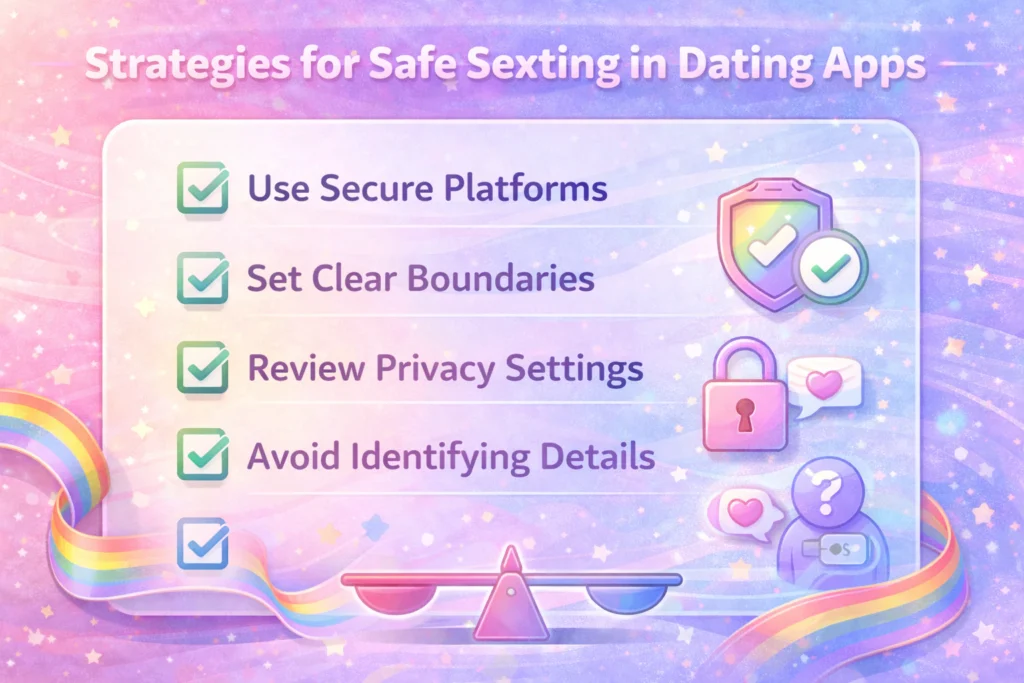
Engaging in sexting can feel exciting and affirming, especially within transgender dating, but it works best when safety comes first. Below is a clear, practical list of strategies to help keep sexting respectful and low-risk.
- Use verified platforms
Choose well-moderated apps and dating apps that offer profile verification, reporting tools, and clear community rules. A reliable trans dating app reduces the chance of fake profiles and unwanted interactions. Many users stick to one best trans dating app, because familiarity makes boundaries easier to manage. - Start with conversation, not content
Use private chat to get a sense of tone and intentions before anything explicit. Early conversations help you decide whether someone feels respectful and aligned with what you want. - Protect your anonymity
Avoid sharing faces, tattoos, locations, or recognizable backgrounds in photos. This matters even more with trans partners, where unwanted exposure can carry added consequences. Keeping details minimal helps preserve a safe space. - Communicate boundaries clearly
Say what you are comfortable with and ask the same in return. Clear consent prevents misunderstandings and helps both sides feel secure. If something feels rushed, it’s okay to slow things down. - Use built-in privacy tools
Take advantage of disappearing messages, screenshot controls, and encrypted messaging where available. These features help reduce long-term risks without disrupting the flow of conversation. - Trust your instincts
If a request feels off, you don’t owe anyone continued access. Blocking or reporting is a valid choice. Many people find better connections by stepping back early and choosing to meet only when it feels right. - Let sexting support, not replace, connection
When it works well, sexting can ease nerves before a first offline date. It should feel optional and mutual, not like a requirement to keep someone’s interest.


Creating a safe and respectful environment for trans women and men online interactions is essential for protecting personal well-being and fostering trust
Used thoughtfully, these strategies help sexting stay consensual, respectful, and aligned with what you actually want from the interaction.
Cultural Perspectives: Views Within Transgender Communities
There’s no attitude toward sexting inside the transgender community. How people feel about it depends on history, comfort with visibility, and the kind of community they interact with online.
For some in the trans community, sexting can feel empowering. It offers a way to express sexuality and interest without the pressure of being physically present. For people who have faced rejection or awkward encounters offline, this distance can make intimacy feel more manageable and respectful.
Others are more cautious. Past experiences with stigma, fetishization, or being treated as an object rather than a person shape how safe sexting feels. On open or poorly moderated sites, these concerns often become stronger. What one person sees as playful or harmless, another may experience as draining or unsafe.
Cultural expectations also differ across platforms. In some spaces, sexting is seen as a normal step toward connection. In others, it’s something reserved for established relationships. These differences surface during online interactions, where assumptions don’t always match.
What people share is simple. Respect, consent, and control matter. When those are present, sexting can support trust.
Representation in Media
Media representation plays a big role in how sexting involving trans people is understood. Too often, trans intimacy is shown in extreme ways. It’s either sensationalized or erased altogether. When sexting does appear in mainstream media, it’s frequently framed through stereotypes rather than real experiences.
This kind of portrayal affects expectations. It shapes how others approach trans people online and how trans users anticipate being treated. When representation focuses on shock or fetishization, it reinforces fear and mistrust instead of curiosity or respect. That pressure often carries into online interactions, where people may assume consent, availability, or specific desires without asking.
More nuanced stories are still rare, but they matter. When media shows trans people as complex individuals navigating intimacy like anyone else, it helps normalize digital connection. Better representation doesn’t just change perception. It makes space for healthier conversations, clearer boundaries, and more respectful communication online.
Role in Building Intimacy
For many people, sexting becomes a way to feel closer before anything happens offline. In trans dating, this often matters more than it might seem. Digital intimacy gives people room to share interest, curiosity, and limits without rushing into physical closeness.
Sexting can make vulnerability feel safer. It allows partners to test emotional chemistry and notice how someone reacts to honesty or hesitation. Sometimes that alone is enough to ease tension before meeting. Sometimes it helps people realize early on that something doesn’t feel right.
When sexting is mutual and unforced, it can build trust. When it’s rushed or treated like an obligation, it usually does the opposite. Intimacy grows when both sides feel free to pause, change their mind, or step back without needing to explain themselves.
Differences in Practices
People sext in very different ways, and that’s normal. Some stick to text and prefer flirting through tone. Others feel more comfortable sharing photos or short videos with their dates, but usually only after trust has built over time.
Pacing often depends on the situation. New connections tend to move slowly. People test the mood, watch reactions, and pause when something feels unclear. In longer relationships, sexting may feel more relaxed or spontaneous simply because there’s less to prove.
Background matters too. Past experiences, culture, and personal boundaries all shape what feels okay. What one person sees as playful can feel stressful or invasive to someone else. That gap is where misunderstandings usually happen.
Sexting works better when people pay attention instead of assuming. Small signals matter. How someone responds, hesitates, or changes tone often says more than what they explicitly say.
Navigating Communication Boundaries: How to Start a Conversation
Starting an intimate conversation online can feel awkward, and that’s normal. Many people overthink how to start a conversation, worrying about saying the wrong thing or crossing a line too early. In reality, most good exchanges begin simply and without pressure.
In transgender dating, being straightforward often works best. Instead of guessing, it helps to check in. Asking what feels comfortable or letting someone set the pace shows respect and lowers tension. Small signals matter here. How someone responds, pauses, or changes the subject usually tells you more than a direct yes or no.
Boundaries aren’t fixed rules. They shift as trust builds. If the energy changes or someone pulls back, taking that seriously keeps things from becoming uncomfortable. Silence or hesitation isn’t failure. It’s information.
A good start isn’t about confidence or perfect wording. It’s about paying attention, staying flexible, and allowing the conversation to unfold naturally rather than forcing it forward.
Overview of Legal Issues
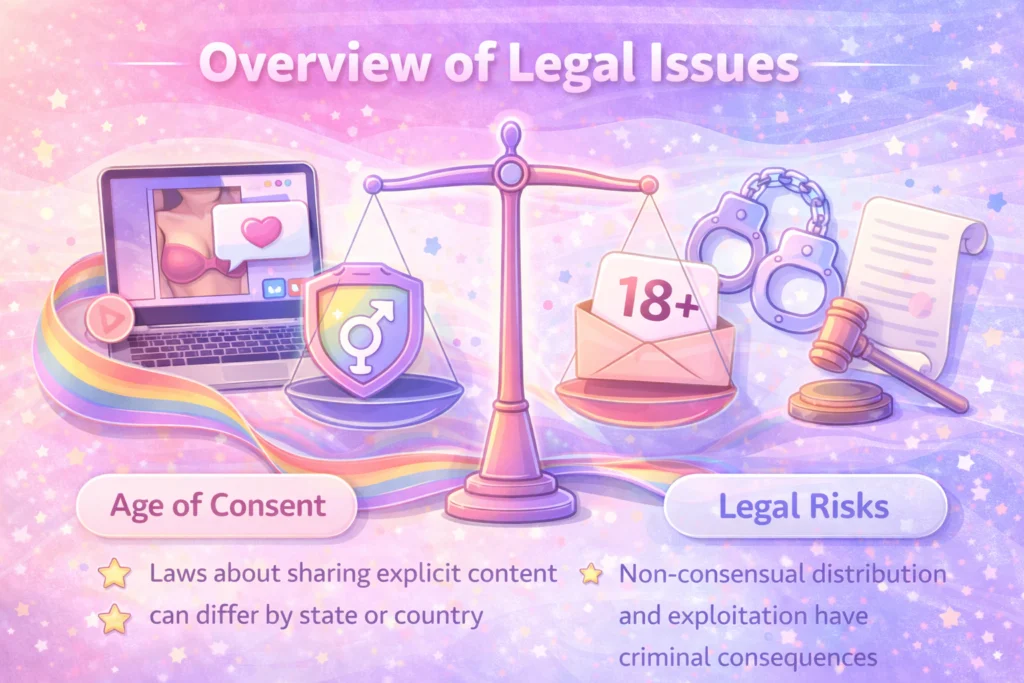
Sexting can feel private, but it still exists within real legal boundaries. Understanding those boundaries matters, especially when it comes to trans sexting, where privacy violations can have serious personal and social consequences.
Key legal risks to keep in mind
- Non-consensual sharing of intimate images
Sharing explicit photos or videos without someone’s consent, often called revenge porn or image-based abuse, is illegal in many parts of the U.S. In New York, for example, New York Penal Law § 245.15 makes the unlawful dissemination of intimate images a criminal offense. At the federal level, the TAKE IT DOWN Act strengthened requirements for platforms to remove non-consensual intimate content when it’s reported. - Blackmail and extortion
Sextortion happens when someone threatens to share intimate content unless demands are met. This is treated as a criminal offense. If this happens, saving messages and images and reporting the situation to the appropriate authorities or support organizations is strongly recommended. - Minors and age verification
Sexting that involves minors is illegal in many jurisdictions, regardless of intent or consent. Under U.S. federal law, 18 U.S.C. § 2252A criminalizes the creation, possession, or distribution of child sexual abuse material, including content shared privately between individuals.
Why these risks can be higher for trans people
For trans people, legal harm often overlaps with other risks, such as being outed, facing discrimination, or dealing with consequences at work or in housing. That’s why anonymity, consent, and choosing the right platform are especially important. Fiorry stands for respectful conversations and strongly advocates for dignity, privacy, and safety in every interaction.

Digital intimacy only works when people feel protected and respected. At Fiorry, we believe safety and consent are non-negotiable parts of meaningful connection
Trusted resources and support
- Cyber Civil Rights Initiative
- National Center for Missing & Exploited Children
- Thorn
- Trans Lifeline
- GLAAD
Specific Laws Affecting Trans People
There isn’t a single U.S. law that covers sexting specifically for trans people. Instead, legal protections come from a mix of court rulings, civil rights law, criminal statutes, and state-level rules. How these laws actually work depends a lot on where you live and what situation you’re dealing with.
At the federal level, protections tied to gender identity mostly come from court interpretation rather than a dedicated statute. Since the Supreme Court’s decision in Bostock v. Clayton County, discrimination based on gender identity has been treated as sex discrimination under Title VII of the Civil Rights Act. As of 2026, this protection clearly applies to employment, but it doesn’t automatically cover every area of daily life.
In healthcare, Section 1557 of the Affordable Care Act prohibits discrimination in federally funded programs. That said, enforcement has shifted over time and continues to face legal challenges, which means protections may look different depending on the state.
State laws vary widely. Some states explicitly protect gender identity in employment, housing, and education. Others don’t. As a result, the legal impact of sexting-related harm, especially when it involves outing or harassment, can change dramatically based on location.
The Equality Act has been introduced in Congress but has not become law as of 2026. If passed, it would create clearer nationwide protections, but for now, outcomes remain uneven.
This section is for informational purposes only and does not constitute legal advice. Laws vary by country and state. Always check your local regulations and consult a qualified professional if needed.
Conclusion
Trans sexting isn’t just about messages or images. For many people, it’s about feeling comfortable enough to be open, curious, and honest in a digital space. When it works well, it can help build trust, ease anxiety, and make connection feel more real, even before meeting in person.
At the same time, it asks for care. Paying attention to consent, boundaries, and safety isn’t a formality. It’s what keeps digital intimacy from turning into pressure or harm. Taking a moment to slow down, choose the right platform, and understand the legal context can make a real difference.
Sexting doesn’t have to follow a script. It works best when it’s mutual, respectful, and aligned with what both people actually want.
FAQ
What misconceptions exist about trans individuals engaging in sexting?
Many assume that all trans people sext to explore their identity, overlooking diverse personal choices and motivations.
How does sexting for transgender individuals compare to that for cisgender people?
Trans individuals may focus more on self-affirmation and careful navigation of identity disclosure during sexting.
Why is consent important in trans sexting, and how can it be clearly communicated?
Consent ensures comfort and respect, and it can be communicated by openly discussing boundaries and preferences beforehand.
Are there safer platforms for transgender individuals interested in sexting?
Yes, some platforms with inclusive gender options and strong privacy features offer safer environments for trans users.
How can transgender people protect their privacy while sexting?
They can use apps with encrypted messaging, limit identifying details in shared content, and use verified platforms.
What psychological effects can sexting have on transgender people?
Sexting can boost confidence and self-esteem but might also evoke anxiety or vulnerability concerns.
In what ways does sexting help build intimacy in transgender relationships?
It fosters emotional connection and affirmation by allowing partners to share desires and validate identity.
What are the indicators of healthy versus unhealthy sexting in relationships?
Healthy sexting includes mutual consent and respect, while unhealthy practices involve pressure or disrespect of boundaries.
How can transgender people approach the stigma surrounding sexting?
By seeking supportive communities and focusing on personal empowerment and safe practices.
What legal protections are available for transgender individuals related to sexting?
Some regions provide anti-discrimination laws and protections against revenge porn that include all individuals, though specifics may vary.
Time to read: 22 min.

American singer
Lady Gaga
Love is a universal language. No matter your gender, everyone deserves love