Why Fiorry Made Photo Verification Mandatory
Editor:
Leona HambArian

Author:
Olena Kosonogova
Olena Kosonogova (she/her) is Chief Information Officer at Fiorry. Olena brings a background in social work and psychology, which gives her a unique perspective on information strategy, systems thinking, and user-focused infrastructure. She oversees data flows, internal systems, and the alignment between technology and communication across the platform. Drawing on her experience in public relations and strategic operations, she helps ensure that Fiorry’s information architecture supports both growth and clarity. Outside of work, Olena values balance through tennis, spending time outdoors, and challenging her mind with a thoughtful game of chess.
Key Takeaways
Online dating was built to make meeting people simpler. By most accounts, it still does. Profiles go up in minutes. Conversations can start the same day.
Lately, though, it’s gotten messier. Fake profiles show up more often than they should. Conversations that start normally take odd turns. Messages that seemed friendly early on start to feel scripted or calculated.
Most people who use dating apps regularly have run into something like this.
A profile looks convincing. The photos seem genuine. The conversation flows, then something shifts. A question that doesn’t quite fit. A request that comes too soon. A reply that could have been sent to anyone. At that point you start wondering if there’s a real person there at all.
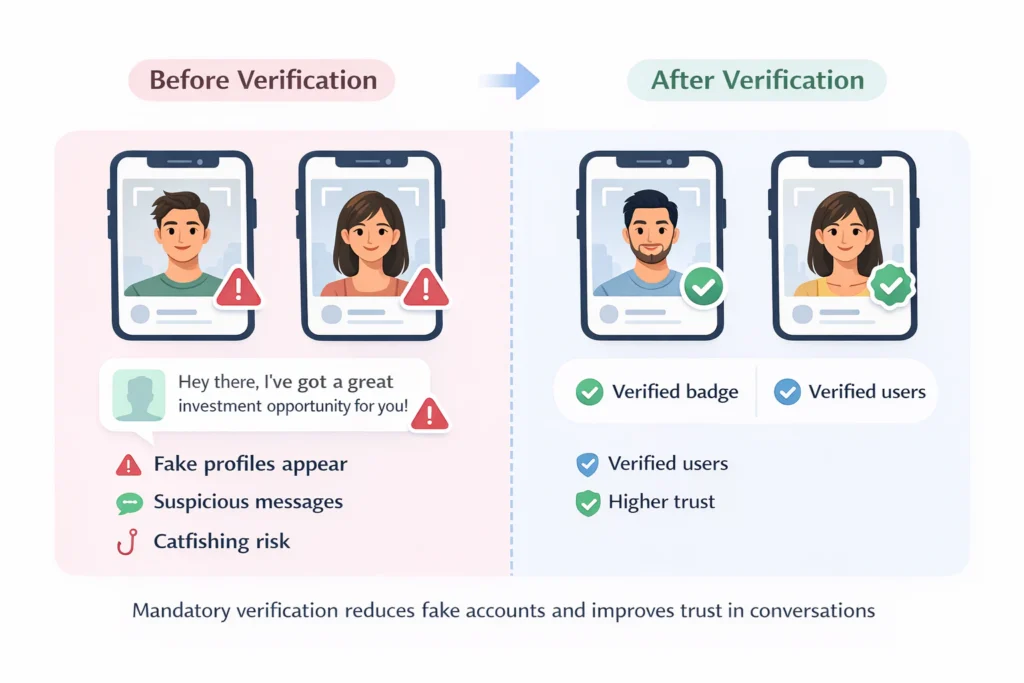
Fiorry recently made photo verification mandatory across the platform in response to exactly this pattern. The goal is to reduce fake accounts, cut down on scam activity, and give users a more reliable sense of who they’re talking to.
The system is already live and applies to all new users. This update is also part of a broader push around dating app safety and keeping the community stable long term.
How Fake Accounts Became a Real Problem
Online dating spread fast. There are no real barriers to entry and signing up takes under two minutes.
That openness is part of the appeal. It’s also what makes the platform easy to exploit.
Setting up a fake account doesn’t take much. Photos pulled from someone’s social media, a short bio, and the account is ready. The whole process can take under ten minutes.
What happens after the first message varies, but it’s rarely good. Some accounts are straightforward impersonation. Others warm up slowly before steering toward financial requests or emotional manipulation. Even a handful of encounters like this shifts how people feel about the entire platform.
Dating services across the industry have poured resources into fake account prevention. The problem is that most traditional moderation is reactive. Accounts get removed after someone reports them, which means a fraudulent profile has already reached real users before anything gets done.
By then, the interaction has already happened. Time was spent. In some cases, personal information was shared.
That’s why more platforms have started leaning on identity verification earlier in the process. Stopping fraudulent accounts before they reach anyone is one of the more effective ways to run a secure online dating platform. Fiorry’s update follows that logic.
How the Verification System Works
The core change is straightforward.
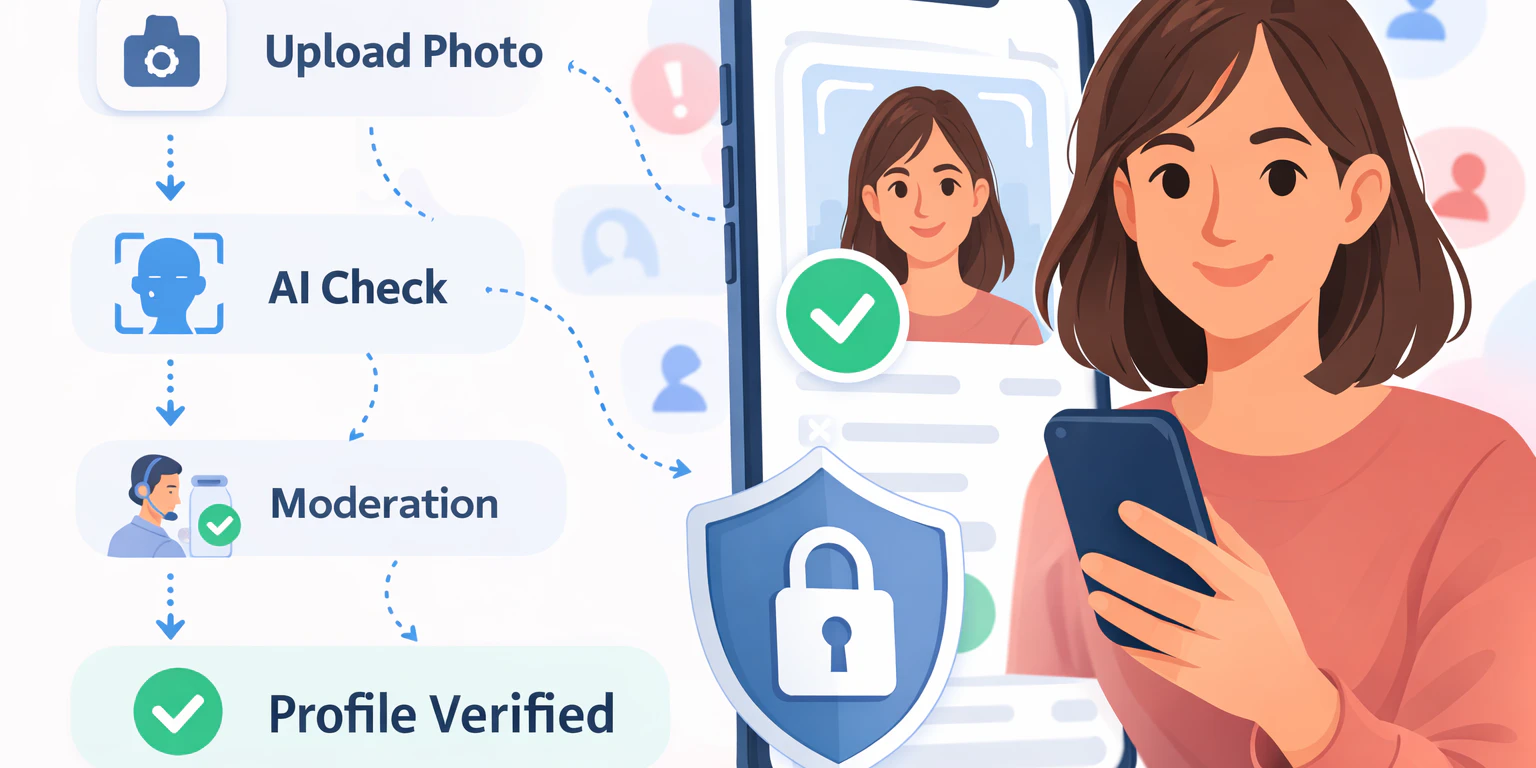
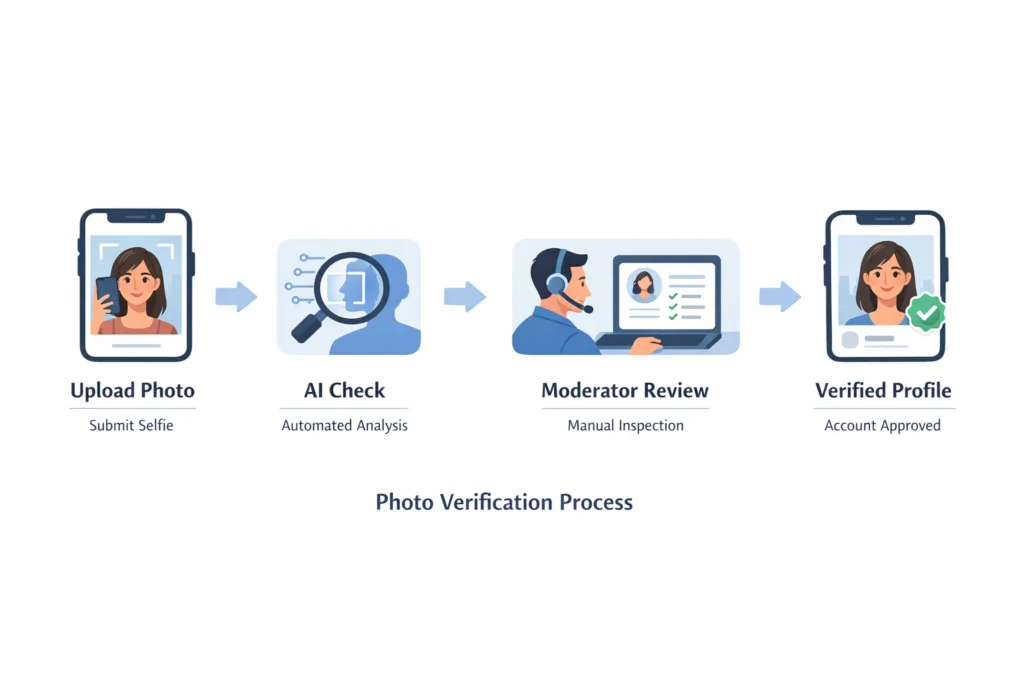
New users now verify their identity before they can start messaging. The check confirms that the person behind the account matches the photos they uploaded. That checkpoint happens before messaging opens up, which is what makes it effective.
Three systems work together to make this function properly.
Verification Before Messaging
Accounts can still register without completing verification, but messaging stays locked until the process is done.
This alone cuts off a significant portion of scam behavior. Many fraudulent accounts work by sending messages to large numbers of users quickly. Requiring verification first breaks that pattern. For genuine users the process is quick. For scammers it’s enough of a hassle that most give up before finishing.
Automated Detection
During verification, automated tools review uploaded images and account behavior for unusual signals. Patterns that match previously flagged activity trigger additional checks. This layer of anti-scam protection catches suspicious profiles early, before they reach the broader user base.
Human Moderation
When automated screening flags something, a moderator reviews the profile manually before activation goes through. This step reduces errors and keeps dating profile verification reliable. It also catches edge cases that automated tools aren’t well-suited to handle alone.
Together, these layers build real catfishing prevention into the platform’s foundation.
Users who want a fuller picture can review Fiorry’s dating platform safety features directly.
What Users Will Actually Notice
For most people, the changes show up quietly.
The clearest difference: accounts that haven’t verified can’t send messages. That single restriction removes a large chunk of suspicious outreach without requiring users to do anything differently.
The subtler shift takes a little longer to feel. When verification becomes the norm, conversations tend to start differently. There’s less of that initial wariness, the mental background check people run before deciding whether to engage. Users know the person they’re talking to has passed a basic authenticity check. That small piece of certainty changes the dynamic.
This is part of a wider set of priorities at Fiorry. The about Fiorry page goes into more detail on how safety considerations shape product decisions and what the platform is trying to build.
This Change Has a Few Downsides Too
Not everyone will be happy about this. Some users want to look around a new platform before handing over any personal information. A verification requirement during sign-up gets in the way of that, even if the process only takes a few minutes.
There’s also the occasional false positive. Automated systems sometimes flag legitimate accounts for additional review. Moderators work through those cases quickly, but a short delay can still happen during activation.
Fiorry’s view is that stronger online dating verification is worth those trade-offs. A platform where people consistently feel safe tends to earn more trust over time than one built around removing every possible point of friction. An extra step during signup is a reasonable cost for a meaningfully better experience on the other side of it.
What Comes Next
Mandatory verification is a first step, and there is more work ahead. For now, the safety system runs on three things: verification, automated screening, and human review. That work doesn’t stop here. Scammers adapt, and the platform has to adapt with them. Work on dating platform safety features and fake account prevention will continue.
Final Thoughts
Good conversations require some level of trust. And trust is hard to build when you’re not sure if the other person actually exists.
Mandatory photo verification in our dating app moves Fiorry closer to making that the default. The result is fewer fake profiles and less scam activity. If you have questions or feedback about the verification system, write to the support team:


Time to read: 6 min.