



Is Texas Trans Friendly? A Real Look at Life, Rights, and Community
Editor:
Olena Kosonogova
Author:
Olena Kosonogova
Olena Kosonogova (she/her) is Chief Information Officer at Fiorry. Olena brings a background in social work and psychology, which gives her a unique perspective on information strategy, systems thinking, and user-focused infrastructure. She oversees data flows, internal systems, and the alignment between technology and communication across the platform. Drawing on her experience in public relations and strategic operations, she helps ensure that Fiorry’s information architecture supports both growth and clarity. Outside of work, Olena values balance through tennis, spending time outdoors, and challenging her mind with a thoughtful game of chess.
Key Takeaways
For many transgender people and others in the LGBT community, the question is Texas trans friendly doesn’t have a quick or simple answer. Texas is huge — and what you feel in Austin or Dallas can be completely different from what happens in smaller towns an hour away. Some places are loud with pride flags and safe spaces, while others still hold on to old rules and quiet judgment.
In recent years, talk about gender identity and sexual orientation has moved from the sidelines to the headlines. There’s debate, yes — but also a growing sense of courage. People show up for each other, share healthcare info, start small community events, and make sure no one feels alone. That’s how progress looks here: messy, loud, and deeply human.
Living openly as a trans person in Texas means knowing both the risks and the real support that’s out there. This guide looks at laws, trans healthcare, and everyday life — and highlights the most inclusive, trans-friendly cities where visibility keeps growing. Change here doesn’t come from speeches. It comes from people — the ones who stay, speak, love, and quietly make the state a little braver every day.
Understanding Transgender Rights in Texas
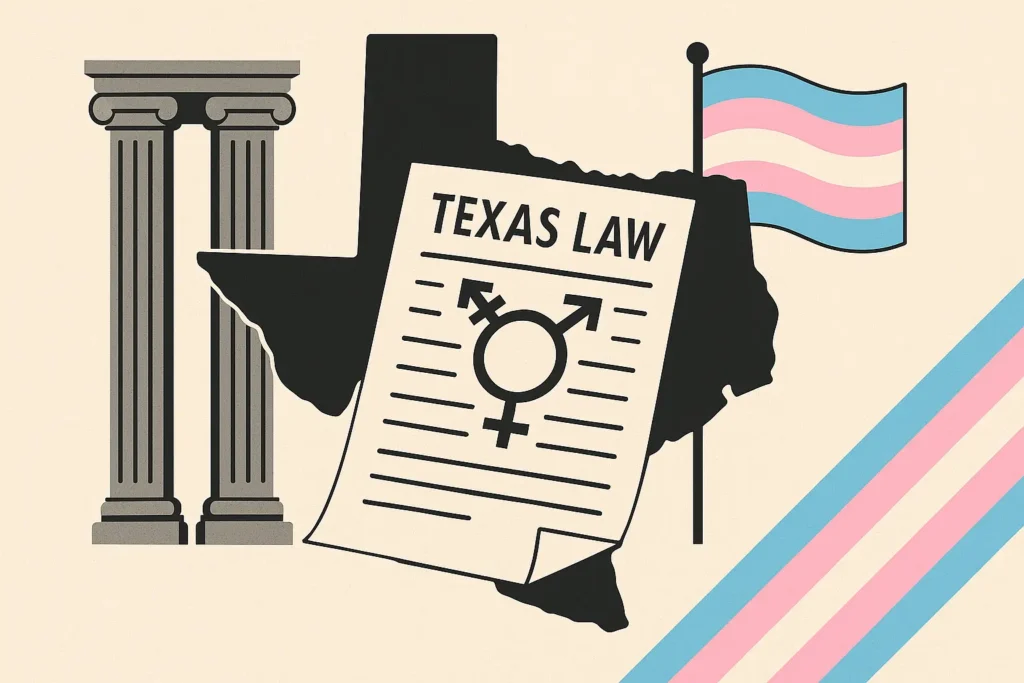
Talking about transgender rights in Texas today means talking about constant change — and not always the kind that brings comfort.
On paper, federal law still protects people from employment discrimination. The Supreme Court ruling in Bostock v. Clayton County made it clear that Title VII covers gender identity and sexual orientation, so firing someone for being trans or gay is illegal across the country.
But the way that plays out on the ground in Texas depends on local judges, clerks, and politics — not just the law itself.
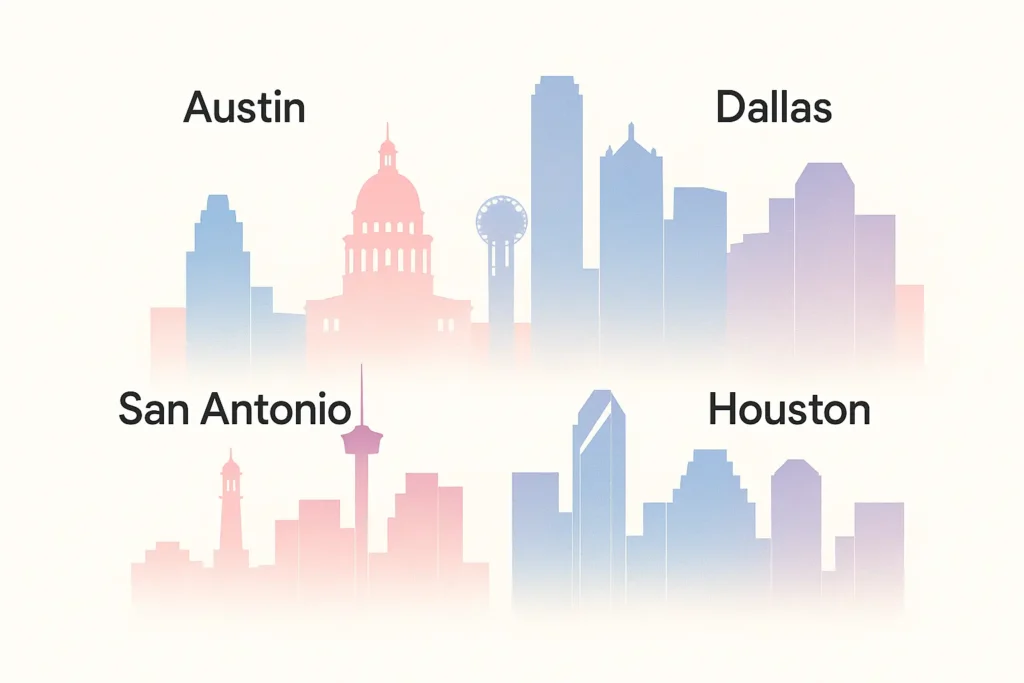
There’s still no statewide law that bans transgender discrimination in housing, healthcare, or public accommodations. Some Texas cities, like Austin, Dallas, and San Antonio, built their own ordinances to protect LGBT rights, but step outside those city limits, and the rules change fast.
Then, in September 2025, House Bill 229 arrived — rewriting Texas law so that “biological sex” means the sex assigned at birth, period. That single definition now guides how state agencies issue drivers licenses, birth certificates, and ID updates. The Department of Public Safety has stopped processing ID gender marker changes altogether, and the Vital Statistics office allows them only for “clerical errors.” For many transgender people, that makes everyday life — from applying for housing to renewing documents — heavier than it needs to be.
Senate Bill 8, taking effect this December, goes even further. It restricts bathrooms and locker rooms in schools and public buildings to a person’s biological sex. And while supporters call it a privacy measure, for many it simply adds another layer of exclusion.
Add to that Senate Bill 14, upheld by the Supreme Court of Texas, which blocks gender-affirming care for minors — even with parental consent. Adults can still access hormone therapy, but the climate around it has grown colder. Attorney General Ken Paxton keeps releasing new legal opinions, and the Texas Legislature debates fresh bills almost every session.
Still, advocacy groups like Equality Texas, Lambda Legal, and the Transgender Education Network of Texas are standing ground. They help people challenge discrimination in court, explain state law in plain language, and remind everyone that resilience is also a right.
And amid all the politics, people keep finding each other — in local support circles, online, and through trans dating communities that turn shared experience into friendship, love, and a sense of safety no statute can erase.
Want a space where you can just be yourself? Join Fiorry — the inclusive app where real people in Texas connect, talk, and build community beyond labels.


Healthcare and Gender-Affirming Care

Finding trans healthcare in Texas in late 2025 isn’t impossible — but it takes patience, planning, and sometimes a lot of driving. What used to feel like routine medicine now depends on your ZIP code, your age, and the bravery of the clinic that’s willing to help.
Since Senate Bill 14 went into effect, all gender-affirming treatment for minors — including puberty blockers and hormone therapy — has been banned. Parents and doctors who once worked side by side now face the risk of losing licenses or worse. The Texas Supreme Court upheld the law, and while supporters call it protection for children, it’s left many young people without safe medical guidance.
For adults, gender-affirming care is still legal, but harder to access. Some health care providers in Austin, Dallas, and Houston continue quietly offering services, often outside big hospital systems. In smaller towns, most people rely on private telehealth clinics or make long trips to inclusive centers. Large companies with private employment insurance still cover transition-related care, but public plans rarely do.
At the state level, the Texas Department and other state agencies now monitor gender-related treatments more closely. Medical professionals have to follow strict documentation rules, and many keep back-up copies of medical records for safety — in case a practice shuts down or a provider refuses transfer. The Texas Tribune has reported on this growing uncertainty inside the healthcare system, where even experienced clinicians fear crossing invisible lines.
Mental-health care has become the quiet backbone of the community. Therapists and counselors across Texas health networks now carry the weight that doctors once shared, helping LGBTQ people deal with anxiety, grief, and burnout. Even though federal law says identity-based discrimination is illegal, no statewide law guarantees protection if a clinic decides to turn someone away.
Still, Texans find ways to take care of each other. Pop-up community clinics, discreet mutual-aid groups, and online lists of trusted doctors help people stay connected. Many find first leads through trans near me groups and local support circles — proof that kindness travels faster than any senate bill or bureaucratic rule.
In a state where politics can overshadow compassion, every appointment kept, every refill given, every listening ear is an act of quiet resistance — and of hope.
Living in Texas as a Trans Person
For anyone living in Texas as a trans person, life can feel like two realities running side by side. In cities like Austin or Dallas, people celebrate Pride, talk openly about identity, and find support in growing community spaces. Drive a few hours west, and you might hit a town where the word “transgender” still draws stares. The laws reflect that split, too — a mix of federal rulings, Texas state law, and new anti-trans legislation that can make even simple things complicated.
The supreme court decision that legalized same-sex marriage back in 2015 changed lives for countless same-sex couples. It meant they could finally get marriage licenses, share health insurance, and build families through joint adoption. But that progress didn’t solve everything. Other laws kept old language about a person’s sex, and many judges still interpret it as “biological sex,” even when court orders say otherwise. That small detail can ripple into real problems — with housing, healthcare, or just being treated fairly in public.
Texas keeps passing several bills that touch gender and identity, from a revived bathroom bill to school restrictions tucked inside education policies. Texas lawmakers often say it’s about protecting tradition, but for LGBT individuals, it’s a reminder that safety can depend on your city or your ZIP code.
Federal law under Title VII still promises to prohibit discrimination and cover employment discrimination based on gender identity or orientation. Yet without clear legal protections at the state level, it’s often up to local courts — and sometimes luck. A few private employment networks go further, enforcing internal equality rules, but others quietly ignore them.
Even public accommodations have grown tricky under new definitions of sex in state statutes. Still, within classrooms, offices, and small businesses, everyday Texans try to do the right thing. Teachers support students, doctors show compassion, and neighbors step in when policy fails.
Support networks for LGBT youth have become a lifeline. Community centers and local nonprofits offer help with paperwork, mental health, or just a space to breathe. Progress here isn’t loud — it’s steady. It lives in kindness, persistence, and the simple belief that inclusion should never be against the law.
Cultural Life and Community
Even when bills stack up on Abbott’s desk, Texas still finds a heartbeat in its people. You can feel it at pride events in Austin or Houston — music in the streets, drag queens leading parades, families cheering from sidewalks. These gatherings make the cities feel like the most progressive places in the South, proving that joy can be its own kind of protest.
On campus, education and community often blend. Student clubs host film nights, teach-ins, and peer support groups. Sometimes, volunteers from the campus law library stop by to explain what to do if someone faces bias or questions about rights. These spaces welcome everyone — LGBT youth, trans students, and people from every background and national origin who just want to belong.
Beyond universities, community centers like Houston’s Montrose Center keep the doors open. You might meet a trans woman running a poetry group, or a veteran helping organize job workshops. Together, they build something the law can’t define — belonging.
And for those looking to meet others beyond events, Houston trans dating helps people connect over shared stories, not just profiles. Because sometimes, finding your people is the first step to feeling at home.
Most Trans-Friendly Cities in Texas
Austin
If there’s one place that feels like the heart of inclusion in Texas, it’s Austin. Known for its music, street art, and open-minded vibe, it remains one of the best cities for queer and trans people to call home. The city’s trans-friendly areas — from East Side coffee shops to South Congress community events — mix creativity with genuine care.
Local healthcare networks still provide gender-affirming care for adults, and grassroots clinics step in where state programs fall short. You’ll meet artists, teachers, and a new generation of female leaders making equality feel local, not political.
And when it comes to connection, trans dating Austin helps people find friendship, love, or simply community — because here, being yourself isn’t the exception, it’s the rule.
San Antonio
San Antonio moves at its own rhythm — slower, warmer, and deeply human. It’s not as loud as Austin, but that’s exactly what makes it special. Here, people still wave to their neighbors, small businesses remember your name, and kindness feels like part of the city’s DNA.
You’ll find welcoming cafés, affirming salons, and community meetups tucked between historic plazas and colorful markets. Housing stays affordable enough that people can actually build lives, not just visit. Local nonprofits host open mics, craft nights, and Pride picnics that feel more like family reunions than formal events.
And for those who want to meet beyond the usual circles, San Antonio trans dating offers an easy way to find real connection — because in this city, warmth isn’t an event, it’s a way of life.
Dallas
Dallas is bold, bright, and full of contrasts — glass towers next to cozy queer bars, corporate offices just a few blocks from drag brunches that feel like family gatherings. The city’s diversity shows up everywhere, from its nightlife to its neighborhoods, where people of every background find ways to belong.
Local advocates keep the pulse strong, organizing community fairs, mutual-aid drives, and mentorship programs that turn connection into care. Equality ordinances give those efforts a backbone, but it’s the people who give them heart.
And when the night winds down, Dallas trans dating helps those connections stretch beyond the weekend — where a friendly chat might turn into something lasting.
Houston
Houston wears its heart on its sleeve. It’s the kind of place where diversity isn’t a slogan — it’s how the city breathes. As Texas’s largest metropolis, Houston has long been home to a visible, resilient queer and trans community that shows up everywhere: in art shows, open mics, marches, and hospital corridors where inclusive care still happens quietly but with pride.
Montrose remains the soul of it all — a neighborhood where decades of activism have built something stronger than fear. Between community clinics, welcoming cafés, and Pride parades that paint the city in color every summer, Houston proves that joy can be its own kind of protest.
Here, connection often starts with a simple hello — or online, through spaces like trans dating in the US, where stories cross paths and strangers become chosen family. Because in Houston, belonging isn’t a dream — it’s a daily act of love.


True inclusivity means making space for every story — and helping people feel seen
Daily Life, Education & Practical Tips
Everyday life in Texas is a mix of routine and resilience. Schools, offices, and landlords each have their own rules — and sometimes, it takes patience just to get through the paperwork. When documents don’t match your name or gender, small tasks like job onboarding or renting an apartment can feel heavier than they should. If that happens, campus resource centers or community clinics can help you find the right law library or legal aid group to sort out court orders and understand how Texas law applies to you.
In workplaces, progress is uneven. Many employers do their best, but employment discrimination based on identity still exists. It helps to know which organizations and companies have real inclusion policies, not just words on paper.
And when it comes to meeting people, safety matters as much as connection. Trusted platforms like how to find trans women on tinder and verified community apps make dating a little less stressful — because everyone deserves to show up as themselves, without fear.
Final Thoughts: Progress, People, and Pride
Being trans in Texas isn’t simple — the laws can sting, and the news can feel endless. But beyond the politics, real life still pulses with color and courage. You see it in the Pride parades that shut down whole streets, in small support circles meeting after work, in neighbors who choose kindness over judgment.
Progress here doesn’t come from speeches — it grows from people who refuse to give up on each other. Texas can be tough, but it’s also full of heart. And if you’re looking to find that kind of connection yourself, how to find trans woman near me is a good place to begin.
FAQ
1. Is Texas actually trans friendly?
It depends on where you land. Cities like Austin, Dallas, and Houston can feel open and supportive, while smaller towns may move at a different pace. Most trans people find that safety comes from community — from friends, neighbors, and the local places that choose kindness.
2. Can I update my gender marker on Texas IDs right now
Right now, it’s extremely hard. State offices only make “clerical” corrections, and even having a court order doesn’t always change the outcome. A lot of people rely on federal documents instead because they’re easier to update.
3. What’s going on with gender-affirming healthcare in Texas?
Adults can still access hormone therapy and other care through private clinics or telehealth providers. For minors, most forms of gender-affirming care are banned, so some families now travel out of state or rely on online support networks.
4. Are there supportive schools or universities for trans students?
Yes — absolutely. Many large campuses have queer student groups, counseling services, and safe events where trans and nonbinary students can show up as themselves. These spaces often feel like a second home.
5. What can I do if I face discrimination?
Local LGBTQ+ organizations and legal aid groups are a good first step. They can explain your rights, help you document the situation, and guide you through filing a complaint if you choose to. You’re not expected to handle it alone.
6. How do trans people usually meet and connect in Texas?
Most start with community: Pride events, art nights, support groups, shared-interest clubs, or online meetups. In bigger cities, there’s always something happening — and it’s often easier to make friends than people expect.
7. What keeps the trans community strong here?
The people themselves. Trans Texans — and the allies around them — show up for each other in big and small ways. A ride to a clinic, a note of encouragement, a table saved at brunch. It’s these everyday acts of care that make the community feel unshakeable.
Time to read: 14 min.


Executive Director for TENT
Emmett Schelling
Trans children are not political punching bags. Everyone deserves access to comprehensive and competent health care informed by accredited medical professionals
Source, April 14, 2023