



Is Spain Trans Friendly? Laws, Safety & Living Guide
Editor:
Olena Kosonogova
Author:
Olena Kosonogova
Olena Kosonogova (she/her) is Chief Information Officer at Fiorry. Olena brings a background in social work and psychology, which gives her a unique perspective on information strategy, systems thinking, and user-focused infrastructure. She oversees data flows, internal systems, and the alignment between technology and communication across the platform. Drawing on her experience in public relations and strategic operations, she helps ensure that Fiorry’s information architecture supports both growth and clarity. Outside of work, Olena values balance through tennis, spending time outdoors, and challenging her mind with a thoughtful game of chess.
Key Takeaways
- Spain's Transgender Laws Changed Everything
- Living in Spain as a Transgender Person: The Day-to-Day Reality
- Trans Rights in Spain: Legal Protections That Actually Matter
- Healthcare Access: The Good, the Bad, and the Regional
- How Safe Is Spain for Trans People? Let's Talk Numbers
- Dating and Relationships: What Trans & LGBT People Need to Know
- Gay, Lesbian, and LGBT Rights: The Broader LGBT Picture
- Regional Differences: Not All of Spain Is Equally Trans-Friendly
- Spain vs. The Rest of Europe: How Does It Stack Up?
- Economic Realities, Gender Identity, and Practical Considerations
- The Political Landscape: Progress Under Threat?
- So, Is Spain Trans-Friendly? The Bottom Line
- Frequently Asked Questions About Trans Life in Spain
Right off the bat: Is Spain trans-friendly? The short answer is: absolutely.
Spain ranks among Europe’s most progressive countries when it comes to transgender rights, backed by groundbreaking laws and solid safety data.
But like any place, the full story has more layers than a tourist brochure lets on.
Let’s dive in.
Spain’s Transgender Laws Changed Everything
Spain made global headlines in February 2023 when it passed the Trans Law—officially known as Law 4/2023.
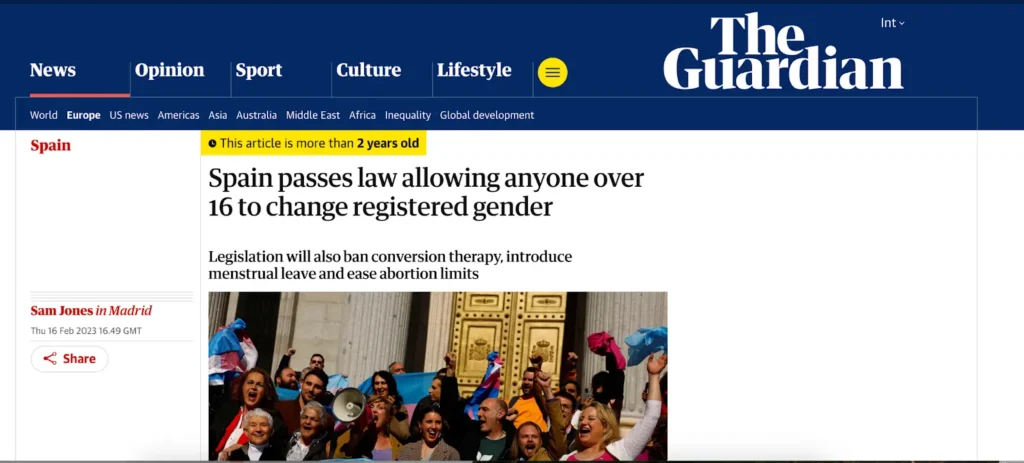
This Spanish parliament flipped the script on how trans people access legal recognition. Instead of jumping through medical hoops, Spanish citizens aged 16 and above can now self-identify their gender through a simple administrative process. Just two appearances at the civil registry office, three months apart, and you’re done.
The comprehensive anti discrimination bill represents a significant milestone for the LGBTI movement, eliminating requirements for a medical diagnosis of gender dysphoria and a two-year period of medical treatment that previously existed. For anyone moving to Spain as trans person or already living there, this means your gender identity is recognized on your terms, not a doctor’s timeline.
The Trans Law allows people aged 14-16 to change their legal gender with parental consent, and those 12-14 can do so with judicial approval. It’s not perfect—critics argue the age restrictions throw younger trans kids under the bus—but it’s still years ahead of most countries where trans rights remain stuck in bureaucratic quicksand.
Spain also became the third country worldwide to legalize same-sex marriage back in 2005, giving same-sex couples full adoption and inheritance rights. That historical momentum set the stage for today’s trans-inclusive policies.
Living in Spain as a Transgender Person: The Day-to-Day Reality
Spanish laws on paper are one thing. Actually living in Spain as a transgender person? That’s where things get interesting.
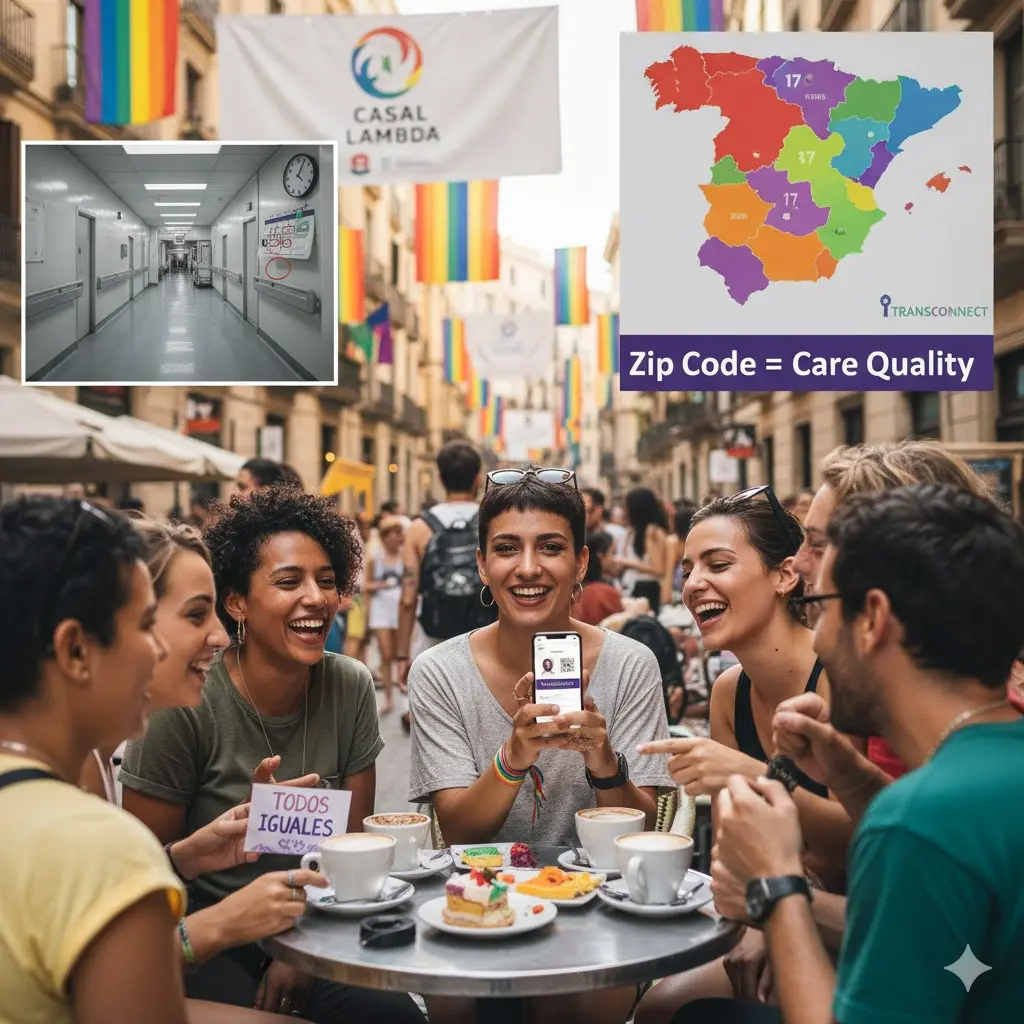
Spain has a national health system where each autonomous community is responsible for providing necessary health services, meaning there are 17 different health services with varying approaches to trans healthcare.
Most regions have developed protocols for trans healthcare, and all costs for transition-related care are free in the public system. But here’s the catch: healthcare quality varies wildly depending on where you live.
Cities like Madrid and Barcelona offer robust gender-affirming services with established gender units. Meanwhile, some regions—like Castilla y León, governed by the far-right Vox party—provide no guarantees that minors will access transgender healthcare, leaving decisions up to individual family doctors.
The inconsistency creates a patchwork experience where your zip code determines your care quality.

Wait times can stretch long too. Some trans people report seeing their endocrinologist every five or six months when they need more frequent attention, especially early in transition. Many trans people end up creating support networks with friends in the LGBT community to fill information gaps.
Finding Your Community
The good news? Spain’s major cities have thriving trans communities. Madrid’s Chueca neighborhood and Barcelona’s Gaixample district aren’t just gay neighborhoods—they’re full-spectrum LGBTQ+ hubs where trans people find both social connection and practical resources.
Barcelona has a liberal atmosphere, diverse and vibrant nightlife, and an inclusive community that makes it a dream destination for the LGBTQ+ community.
Organizations like COGAM in Madrid and Casal Lambda in Barcelona provide support services, legal advice, and community events.
If you’re looking to meet transgender people near me, these organizations often host regular gatherings and can connect you with local trans communities. For dating specifically, using a transgender dating app designed for authentic connections beats trying learn how to find trans women on Tinder where you might face unwanted attention or fetishization.
Want to find trans people in Spain? Try our trans dating app today.


Trans Rights in Spain: Legal Protections That Actually Matter
Discrimination in employment regarding sexual orientation has been banned nationwide since 1995, and a broader law prohibiting discrimination based on sexual orientation and gender identity in employment and provision of goods and services was passed in 2022.
Companies with more than 50 employees must implement procedures promoting equality and preventing harassment of LGTBQ people in the workplace—though enforcement remains a work in progress.
The Trans Law also prohibits conversion therapy, bans unnecessary medical interventions on intersex infants, and grants single women and women in same-sex relationships access to IVF. Spain’s Zerolo law specifically protects LGBT people from housing discrimination.
Legal protections extend to hate crime legislation too. Hate speech based on sexual orientation and gender identity has been banned since 1995, and crimes motivated by the victim’s sexual orientation or gender identity result in additional legal penalties.
Spain even launched toll-free hotlines in 2023—’028′ assists victims of homophobia and transphobia with comprehensive support for anti-LGBT discrimination and hate crimes.
Healthcare Access: The Good, the Bad, and the Regional
Spain’s public healthcare system covers gender-affirming medical procedures, which sounds fantastic until you dig into regional variations. Spain is the only EU Member State which guarantees access to Assisted Reproductive Technologies for trans people through law. That’s genuinely progressive.
Eight regions of Spain don’t require a psychiatric diagnosis to access any form of trans-specific healthcare—they operate on informed consent models. But other regions still cling to outdated pathologizing frameworks that treat being transgender like something needing to be “cured” rather than affirmed.
Hormone replacement therapy is available nationwide (except in a few regions like Castilla y León where access depends on local politics). Surgery availability varies more dramatically. Some people get referred to private hospitals or need to travel to other autonomous communities to access gender confirmation procedures. The public system covers costs, but logistical hassles remain.
How Safe Is Spain for Trans People? Let’s Talk Numbers
Now, let’s discuss how safe is Spain.
Spain’s reputation as LGBT-friendly isn’t just marketing hype—it’s backed by data.
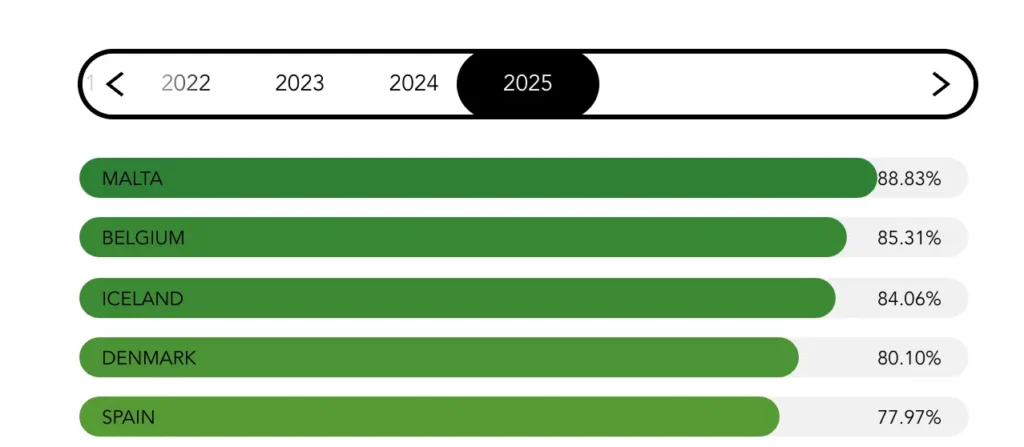
Spain ranked fifth out of 49 European countries in the annual Rainbow Europe rankings in 2025, achieving an overall score of 77.97 percent for its legal, political, and human rights provisions.
Public opinion strongly supports trans people too. A Pew Research Center study found that more than 88 percent of Spanish citizens accepted homosexual acts, making it the most LGBT-friendly of 39 countries polled. More recent polling shows this acceptance extends to transgender people, with 87% of Spaniards supporting trans or non-binary family members.
But statistics never tell the complete story.
A recent report recorded 522 hate crimes in Spain motivated by the victim’s sexual orientation or gender identity. The transgender community faces disproportionate impact, with 44% reporting they’ve experienced discrimination or violence.
Most hate crimes manifest as harassment rather than physical violence. Cities generally feel safer than rural areas. Women generally report feeling safe even when walking alone at night in most areas, and LGBTQ+ safety is high, with Spain being one of the most progressive countries in Europe regarding LGBTQ+ rights and acceptance.
Madrid and Barcelona lead the way for safety and visibility. Madrid’s Chueca neighborhood is one of the largest queer districts in Europe, and rainbow flags flutter from city balconies and beach bars across the country. That visible pride creates a protective social environment where being openly trans doesn’t automatically invite trouble.
Coastal towns like Sitges, Torremolinos, and Maspalomas have developed reputations as LGBT havens where trans people can live authentically without constant vigilance.
Dating and Relationships: What Trans & LGBT People Need to Know
Spain’s cultural shift around trans acceptance extends into dating and relationships. While other countries wrestle with stigma, Spain’s younger generations largely view transgender identity as unremarkable.
That doesn’t mean transphobia has vanished—it hasn’t—but the social climate differs dramatically from more conservative regions.
For those interested in trans dating in Barcelona, the city offers numerous LGBT-friendly venues, events, and social opportunities.
The beauty of Spain’s approach is that trans women aren’t relegated to niche spaces—they’re integrated into mainstream social life.

Sure, there are specific LGBT venues if you want that community vibe, but you’ll also find trans people living openly in every neighborhood, working every profession, participating fully in civic life.
What about the challenges?
When people ask about the benefits of dating a trans woman, they’re often coming from places where trans relationships face intense social scrutiny.
In Spain’s major cities, you’re dealing with the same dating challenges as anyone else—navigating chemistry, communication, and compatibility—without the added weight of constant external judgment. The social pressure that makes trans dating stressful elsewhere?
It’s significantly reduced here. You won’t face the same level of stares, judgment, or social ostracization that plague trans relationships in less accepting places.
Dating apps like Fiorry create safer spaces, if you’re wondering how find trans woman near me without the transphobia common on mainstream platforms.
Gay, Lesbian, and LGBT Rights: The Broader LGBT Picture
Spain’s trans-friendly reputation exists within a larger context of LGBT acceptance. The country legalized same-sex marriage in 2005, becoming only the third nation worldwide to do so. Same-sex couples received full marriage rights including adoption, with the law taking effect on July 3, 2005.
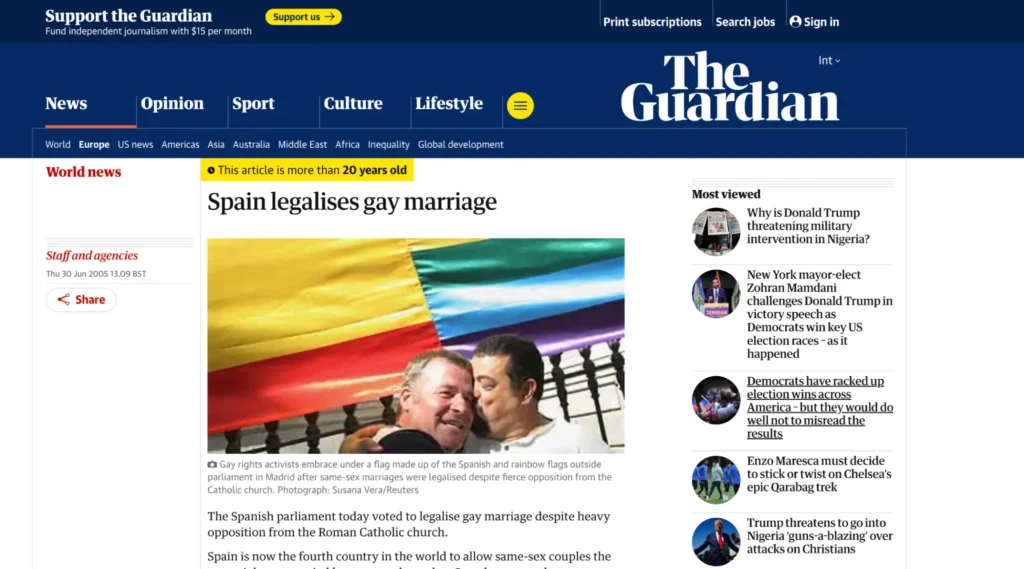
Today, 10 percent of Spain’s population identifies as part of the LGBTQIA+ community. That’s one of the highest rates in Europe, suggesting people feel comfortable being open about their identities.
Same-sex couples enjoy identical rights to heterosexual couples regarding adoption, assisted reproduction, and inheritance.
Since 2015, married lesbian couples can register both their names on their child’s birth certificate. Spain fully recognizes same-sex marriages and partnerships for immigration purposes, making it easier for LGBT people to relocate here with partners.
The LGBT community remains visible and celebrated through massive pride events. Madrid Pride attracts 1.5 million people annually, making it one of the world’s largest celebrations.
Barcelona, Sitges, Valencia, Málaga, Gran Canaria—pride festivals happen across the country, not just in major cities. These aren’t token diversity events. They’re massive cultural moments where entire cities shut down streets, hang rainbow flags from government buildings, and participate enthusiastically.
Regional Differences: Not All of Spain Is Equally Trans-Friendly
Here’s where we need some honesty: Spain isn’t uniformly progressive. Regional politics create significant variations in how trans people experience daily life.
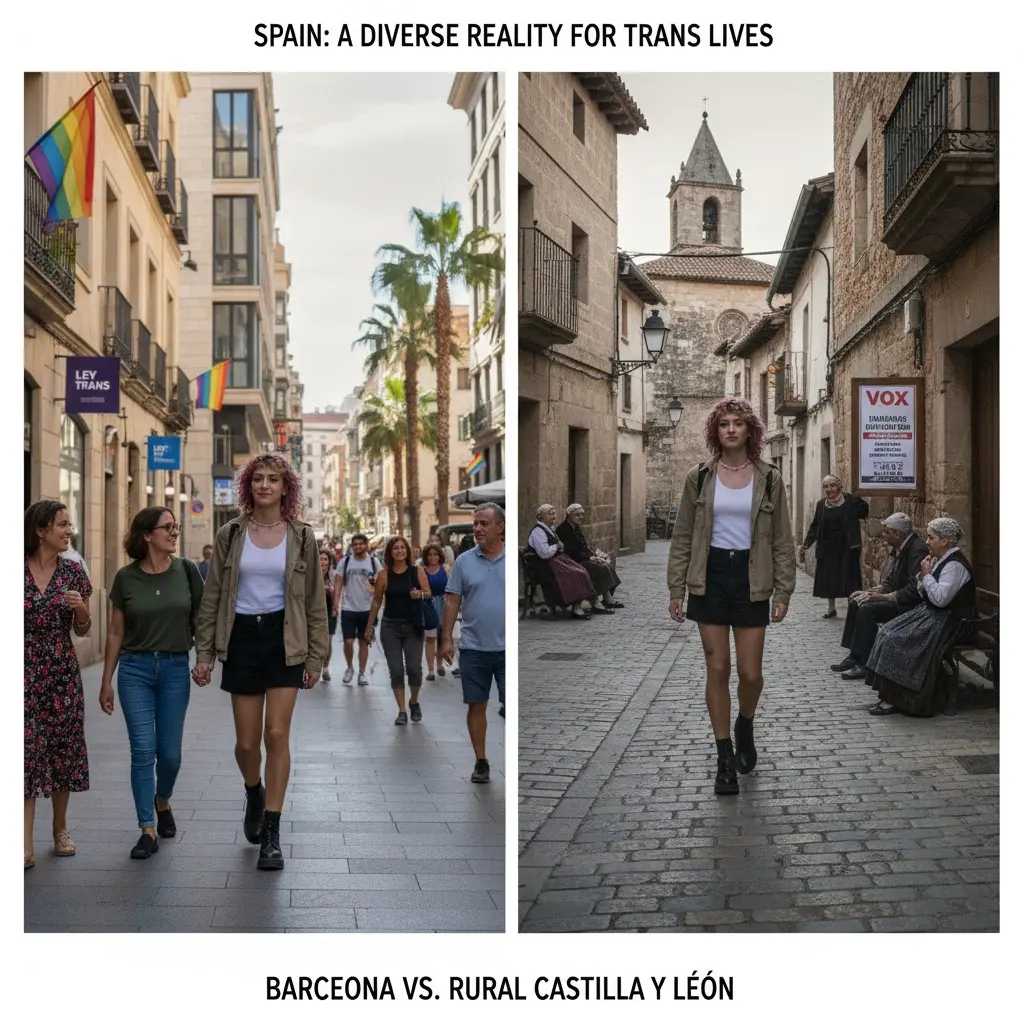
The far-right Vox party has gained traction in certain regions and actively opposes trans rights. Vox’s 2023 Electoral Program reinforced opposition to hormonal treatments and sex change surgery for minors and argues the alleged unconstitutionality of self-identification laws.
In 2023, Madrid’s regional government, led by the conservative Popular Party in coalition with Vox, rolled back several trans protections that had been guaranteed under national law.
Rural areas and small villages can harbor more traditional, conservative attitudes.
While you’re unlikely to face overt hostility, you might encounter stares, questions, or microaggressions that wouldn’t happen in Madrid or Barcelona.
Older generations sometimes struggle with understanding trans identities, though this varies widely by individual.
Catalonia, Andalusia, Valencia, the Basque Country, and other regions had already passed their own trans self-identification laws before the national Trans Law—these areas tend to be more progressive. Regions governed by or influenced by Vox show less enthusiasm for protecting trans rights, though national law still applies.
The takeaway? Research your specific destination within Spain. Moving to Barcelona or Madrid offers a dramatically different experience than relocating to a small town in Castilla y León.


It is revolutionary for any trans person to choose to be seen and visible in a world that tells us we should not exist
Source, 2014
Spain vs. The Rest of Europe: How Does It Stack Up?
Belgium, Bosnia and Herzegovina, Denmark, Finland, Greece, Iceland, Montenegro, Serbia and Spain are the only countries that have full coverage of sexual orientation, gender identity, expression and sex characteristics in their anti-discrimination legislations. That places Spain in elite company.
- Only Belgium, Denmark, Greece, Iceland, Malta, and some regions in Spain and the UK prohibit hate crime and hate speech on grounds of sexual orientation, gender identity, and sex characteristics.
- Only Germany, Greece, Iceland, Malta, Portugal and Spain prohibit unnecessary surgical or medical interventions on intersex children.
Compared to Northern Europe’s traditionally liberal countries, Spain holds its own. It outpaces France, Ireland, and the UK on several trans rights metrics. Eastern European countries aren’t even in the same conversation—Spain’s light-years ahead in terms of legal protections and social acceptance.
The comparison that matters most: Spain offers better trans rights and social acceptance than the United States, United Kingdom, and most other Western nations. If you’re considering relocation, Spain consistently ranks in Europe’s top five for trans-friendly policies and lived experience.
Economic Realities, Gender Identity, and Practical Considerations
Spain’s trans-friendly reputation is real, but practical challenges exist. The LGBTQIA+ community registers higher risk of material deprivation and higher shares of people at risk of poverty. Trans people specifically face lower employment rates despite discrimination being illegal.
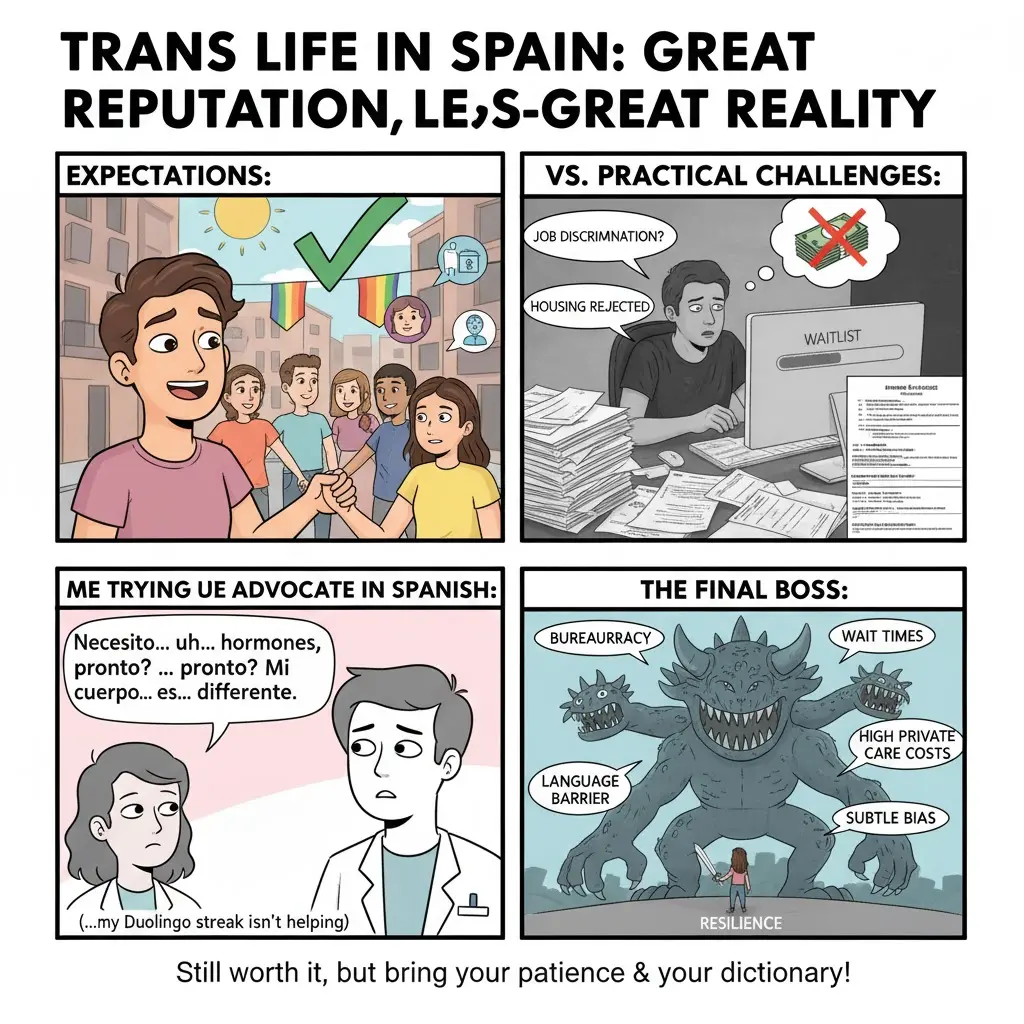
The job market can be tough for everyone in Spain, but trans people encounter additional barriers. While companies with 50+ employees must implement equality procedures, enforcement isn’t always rigorous. Some trans people report discrimination during hiring or subtle bias that’s hard to prove legally.
Healthcare costs are covered by the public system, but long wait times sometimes push people toward private care. Private hormone therapy, surgery, or psychological support can cost hundreds or thousands of euros. Trans people with financial resources access better, faster care than those relying entirely on public services.
Housing discrimination is illegal under the Zerolo law, but finding rental properties can still be challenging, especially outside major cities. Some landlords remain prejudiced despite legal protections. Trans people sometimes face requests for extra documentation or encounter landlords who “already rented” the apartment once they realize an applicant is trans.
Language barriers affect anyone moving to Spain, but trans people navigating healthcare systems need to communicate clearly about medical needs. While many doctors in major cities speak English, you’ll encounter situations requiring Spanish fluency. Learning the language isn’t just practical—it’s essential for advocating for yourself in medical and legal contexts.
The Political Landscape: Progress Under Threat?
Spain’s trans rights didn’t materialize overnight. They’re the result of decades of activism, coalition-building, and political battles. The Socialist Workers’ Party (PSOE) led the charge on same-sex marriage in 2005 and in the Trans Law in 2023, but internal party conflicts reveal ongoing tensions.
In December 2024, the PSOE sparked controversy by announcing intentions to restrict trans women’s participation in female sports. The proposal aimed to limit participation in women’s sports to people assigned female at birth, sparking significant backlash from LGBTQ+ rights organizations, coalition partners, and activist groups. Former equality minister Irene Montero warned that “transphobia in sport generates transphobic violence.”
No formal legislation has passed yet, but the proposal signals that even progressive parties aren’t uniformly supportive. It’s a reminder that rights can be challenged, rolled back, or eroded if vigilance drops.
The far-right Vox political party continues pushing for repeal of trans-friendly laws. While they lack power to unilaterally overturn national legislation, their influence in regional governments allows them to undermine implementation. Conservative Popular Party politicians sometimes side with Vox on trans issues despite claiming moderate stances.
Spain’s political future matters for trans rights. Elections have consequences. If right-wing parties gain more power nationally, the protections trans people currently enjoy could face serious threats. That’s not fearmongering—it’s acknowledging political reality in a country where the far-right has gained ground.
So, Is Spain Trans-Friendly? The Bottom Line
Is Spain trans-friendly?
Yes—but with important caveats. Spain offers some of Europe’s strongest legal protections for trans people, genuine cultural acceptance in major cities, accessible healthcare (with regional variations), and vibrant LGBT communities where trans people thrive. You can change your legal gender without medical gatekeeping. You’re protected from discrimination in employment, housing, and public services. You can meet transgender people near me through apps, social groups, and everyday life without being forced into the shadows.
But Spain isn’t paradise.
Healthcare quality varies by region. Wait times can be long. Rural areas lag behind cities in acceptance. The far-right threatens to roll back protections. Economic inequalities hit the trans community harder. And while hate crimes have decreased, they haven’t disappeared.
For trans people considering moving to Spain as trans person, the country offers significantly better opportunities than most alternatives. It’s not perfect, but few places are. What Spain provides is a foundation—legal rights, social acceptance, community resources—that allows trans people to build authentic lives without constantly fighting for basic dignity.
The question isn’t whether Spain is trans-friendly in some absolute sense. It’s whether Spain is trans-friendly enough for you, given your specific circumstances, risk tolerance, and priorities. For many trans people, the answer is an emphatic yes. Spain’s combination of progressive laws, cultural acceptance, and quality of life makes it one of the world’s most appealing destinations for trans people seeking a place to call home.
Want to connect with the trans community in Spain or explore dating possibilities before making the leap? Download the Fiorry app today—because whether you’re already in Barcelona or planning your move to Madrid, everyone deserves to find genuine connections in a space that celebrates who they are.
Frequently Asked Questions About Trans Life in Spain
Is Spain safe for trans travelers?
Yes, Spain is generally safe for trans travelers, especially in major cities and tourist destinations. Spain ranks fourth in Europe for LGBTQ+ rights protections and has strong hate crime legislation. While 522 hate crimes based on sexual orientation or gender identity were reported in 2023, most incidents involve harassment rather than physical violence. Cities like Madrid, Barcelona, Valencia, and coastal towns like Sitges offer particularly welcoming environments. That said, rural areas may be less accepting, and you should exercise normal travel precautions.
How LGBT friendly is Spain?
Spain is exceptionally LGBT friendly. It legalized same-sex marriage in 2005 (third country worldwide), passed comprehensive anti-discrimination laws, and enacted the Trans Law in 2023 allowing self-identification. Public opinion strongly supports LGBT rights, sexual relationship, transgender teenagers, change legal gender, etc. 88% of Spaniards accept homosexuality according to Pew Research, and 10% of the population identifies as LGBTQIA+. Major cities host massive Pride celebrations, and LGBT culture is integrated into mainstream society rather than marginalized.
What is the safest country for trans people?
Malta consistently ranks first in Europe for trans rights, followed closely by Belgium, Iceland, and Spain. Spain’s combination of legal protections, accessible healthcare, and cultural acceptance makes it one of the safest countries globally for trans people. The Trans Law allows self-identification without medical gatekeeping, public healthcare covers transition-related care, and anti-discrimination protections extend to employment, housing, and public services.
Is Barcelona safe for LGBT?
Barcelona is very safe for LGBT people. The city has been at the forefront of LGBT rights since 1977 when it hosted Spain’s first gay rights march. Barcelona’s Gaixample neighborhood is one of Europe’s largest LGBT districts, featuring hundreds of gay-friendly businesses, bars, and cultural venues. The city has an openly gay mayor, LGBT-specific beaches like Mar Bella, and hosts major Pride celebrations. While petty crime affects all tourists, anti-LGBT violence is rare, and the city’s culture embraces diversity.
Is Spain a good place to live for trans people as a legal gender?
Spain ranks among Europe’s best countries for trans people to live. The legal framework protects same sex couples right against discrimination, healthcare covers transition-related services (though quality varies by region), and major cities have established trans communities with support networks. Barcelona and Madrid offer the strongest infrastructure, while smaller cities and rural areas may present more challenges. Economic opportunities exist but unemployment affects trans people disproportionately. Overall, Spain provides a foundation for authentic living that few countries match.
What country has the highest LGBT rate?
Spain reports one of the highest LGBT identification rates globally at approximately 10% of the population. This high percentage likely reflects both genuine population demographics and Spain’s accepting environment where people feel comfortable being open about their identities. Countries with oppressive laws naturally show lower reported rates because people remain closeted. Spain’s progressive legal framework and cultural acceptance enable authentic self-reporting.
Do trans people have rights in Spain?
Yes, trans people have extensive rights in Spain. The 2023 Trans Law allows self-identification for gender recognition without medical requirements. Anti-discrimination laws protect trans people in employment, housing, healthcare, and public services. Hate crimes based on gender identity carry enhanced penalties. Trans people can marry, adopt children, access IVF services, and receive gender-affirming healthcare through the public system. Conversion therapy is banned, and unnecessary surgeries on intersex infants are prohibited.
What is the most LGBT friendly country in Europe?
Malta consistently tops European LGBT rankings, followed by Belgium, Iceland, and Spain. Denmark, Norway, and Portugal also score highly. Spain’s fourth-place ranking reflects strong legal protections, cultural acceptance, and comprehensive anti-discrimination frameworks. The country’s combination of progressive laws, thriving LGBT communities in major cities, and integration of LGBT culture into mainstream society makes it a top destination.
What is the homosexuality rate in Spain?
Approximately 10% of Spain’s population identifies as part of the LGBTQIA+ community, including gay men, lesbian women, bisexual people, and transgender individuals. Public opinion data shows overwhelming acceptance—88% of Spaniards support homosexuality according to Pew Research. This acceptance creates an environment where LGBT people, heterosexual people, and everyone in between can live openly without fear, potentially leading to higher reported rates compared to less accepting countries where social conditions force people to stay closeted. The same rights extend to male and female individuals regardless of sexual orientation or gender identity.
When did it stop being illegal to be gay in Spain?
Homosexuality was decriminalized in Spain in 1979, following the end of Francisco Franco’s dictatorship in 1975. Under Franco’s regime, homosexuality was criminalized through the 1954 Ley de Vagos y Maleantes (Vagrancy and Common Delinquents Law) and the 1970 Ley de Peligrosidad y Rehabilitación Social (Law on Danger and Social Rehabilitation), which imprisoned gay men, lesbians, and bisexual people in large numbers under certain conditions. This new law in 1979 marked Spain’s transition to democracy and brought swift changes—decriminalization came just four years after Franco’s death, representing a dramatic shift toward personal freedoms. The changes extended beyond criminal justice to affect official documents, education, social services, and public services, ensuring two persons of the same sex could live together without legal consequences.
What is the most gay city in Spain?
Madrid holds the title as Spain’s gay capital, ranking sixth globally among the most LGBT-friendly cities. The city’s Chueca neighborhood is one of Europe’s largest queer districts, hosting over 1.5 million people annually for Madrid Pride. Barcelona runs a close second with its Gaixample district and vibrant LGBT scene. Coastal destinations like Sitges (near Barcelona), Torremolinos (Costa del Sol), and Maspalomas (Gran Canaria) also attract significant LGBT populations and tourists, each offering unique community vibes. Even smaller autonomous communities like La Rioja have developed LGBT-friendly policies and protections.
Time to read: 20 min.


PR Manager
Olena Kosonogova
Real equality comes from having a national health system that offers consistent, respectful care across all regions, not a lottery based on where you happen to live